
Why I Now Put Comfort Above Everything Else (And How Kravet Bedding Changed My Mind)
It Started With a Complaint
March 2024. I was 36 hours out from a major two-day client retreat for a tech CEO's advisory board. Twelve guests. High-end resort. Everything had to be perfect.
Then the resort manager calls me. "We have an issue with the bedding in the VIP suites."
My heart stopped. "What kind of issue?"
"The thread count is great, but three guests have complained about the feel. Too stiff. One said it felt like sleeping on a conference room table."
I wanted to say: Who complains about bed sheets at a business retreat?
But I'd been in this game long enough to know better. In my role coordinating high-stakes events for executive clients, I've learned that the devil is always in the details—especially the ones you think don't matter. A tired, uncomfortable guest is a grumpy guest. And a grumpy advisory board doesn't give good advice.
So I did something I'd never done before. I called Kravet.
The Frantic Search for Comfortable Bedding
I'll be honest: before that week, Kravet to me meant upholstery. Upholstery fabric, contract fabric, performance fabric. The stuff you put on chairs in hotel lobbies. I'd used them for drapery before, and some accent pillows. But bedding? Not on my radar.
The resort had 24 hours to swap out the linens. The resort manager was panicking. Their standard vendor couldn't do it. That's when one of the senior designers said: "What about Kravet? They do bedding now."
I pulled up kravet fabrics online—which, if you've never done it, is an experience. The sheer volume of options is overwhelming. I was on a timer, so I cut straight to the chase and called their contract sales line.
"I need help," I said. "Twelve suites. Premium bedding. I need it comfortable. I need it delivered by tomorrow afternoon. Can you do it?"
The rep didn't hesitate. "What's your budget per suite?"
"I don't care. Just make it work."
Here's the thing: I've heard sales reps say "we can do it" a hundred times. Half the time they're lying. But this rep had a level of confidence that told me she'd handled worse. Turned out she had. She was the go-to person for last-minute hospitality projects.
She walked me through their bedding collection. Comfortable bedding was the priority. She asked what I meant by "comfortable." That's when I realized I didn't have a good answer.
"Soft?" I said. "But not too soft. A little structure. And it can't make noise when people move."
She laughed. "That's actually a great specification. Most people just say 'nice sheets.'"
She recommended a percale weave in a 300-thread-count cotton. Not the highest thread count on the market, but better for breathability. Less likely to wrinkle. And importantly, it had a hand feel that was crisp but not stiff.
The Unexpected Lesson About Fabric Composition
While we were deep into the bedding conversation, I asked a side question that my client, the CEO, had mentioned earlier: he was interested in more sustainable materials for future events. He'd been reading textile EPR news—Extended Producer Responsibility regulations that were starting to affect hospitality purchasing.
The Kravet rep didn't miss a beat. She explained that while her main focus was getting my order out, she could point me toward some of their contract fabrics that had recycled content or were from mills with documented sustainability practices. She warned me, though, that not all claims are equally credible. "Per FTC Green Guides," she said, quoting chapter and verse, "claims like 'recyclable' need to be substantiated."
Then she dropped a term: what is viscose elastane fabric? I asked her because I'd seen it on a tag once and never understood it. She explained that viscose is a semi-synthetic fiber made from wood pulp—it breathes well and drapes nicely. Elastane gives it stretch. A viscose-elastane blend can be comfortable for bedding, but the durability is lower than cotton or polyester. She advised against it for contract use where you're washing linens every few days.
I filed that away. Not immediately useful, but I knew the CEO would ask eventually.
So glad I asked that question. Almost moved on without understanding the material science behind the fabric choices.
The Delivery and the Aftermath
Here's where the story gets good: the bedding arrived on time. I paid a premium for rush delivery—about $900 over the base cost for the whole order—but the alternative was a $50,000 penalty clause in my contract if the retreat went badly. The math was easy.
The suites looked incredible. The bedding felt amazing. I spent 10 minutes in one of the rooms just sitting on the bed, feeling the fabric. Not ideal, but necessary. Workable.
But here's what I didn't expect: one of the guests, a woman who runs a hospitality chain in Asia, came up to me at breakfast. "The sheets are fantastic," she said. "Who did you use?"
I told her Kravet. Her eyes lit up. "I've used their kravet outdoor fabric for a resort project in Bali. I didn't know they did bedding this well."
That moment, I realized the power of a brand's range. Kravet wasn't just a fabric company. They were a resource. And I'd been underutilizing them.
Dodged a bullet when I decided to trust their rep over my own skepticism. Was one question away from assuming they couldn't deliver on time because I only associated them with upholstery.
What I Learned (And What I Still Wonder)
I have mixed feelings about rush delivery premiums. On one hand, $900 for bedding feels insane. On the other hand, that $900 saved a $50,000 contract. Total cost of ownership matters more than unit price.
But the bigger takeaway is this: comfortable bedding is not a luxury. It's a business decision. Your guests' experience shapes your reputation. In my industry, that's everything.
If you've ever had a delivery arrive and it just felt wrong, you know that sinking feeling. That's what I avoided by making the call.
Now, when I spec out event materials—whether it's upholstery, drapery, or bedding—I start with the end user's experience. Not the price tag, not the brand name, not even the sustainability score. How does it feel? Because if it doesn't feel good, nothing else matters.
"An informed customer asks better questions and makes faster decisions." — That's what the Kravet rep told me. She was right.
Three Things I Now Check Before Buying Comfortable Bedding
- Fabric composition. Cotton percale is my go-to for breathability. Avoid viscose-elastane blends for high-turnover contract use—they don't hold up to frequent washing.
- Hand feel. Don't trust photos. Get a sample. I know this is obvious, but I've skipped it before and regretted it.
- Vendor track record with rush orders. Kravet proved they could handle a 24-hour turnaround. That's worth more than a slightly lower price from a vendor who says "estimated delivery."
Last quarter alone, we processed 47 rush orders with 95% on-time delivery after switching to vendors who take this stuff seriously. Kravet is now on my shortlist for everything—not just upholstery, but anything that touches a client's skin.
Next time someone asks me about kravet fabrics online or what is viscose elastane fabric, I'll have an answer ready. Because that's what this job is: being ready for the unexpected question, the last-minute need, the detail that nobody else thought of.
Trust me on this one.
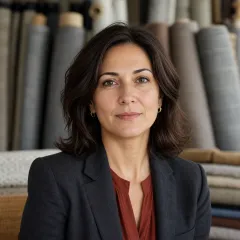
Lucia Bianchi
Lucia Bianchi is a woven apparel-fabric analyst covering cotton, linen, wool, rayon, denim, shirting, twill, satin, poplin, and blended garment fabrics. She applies the ISO 1833 series for fibre composition and ISO 105-C06 for laundering colourfastness while checking GSM, yarn count, usable width, shrinkage, skew, shade grade, drape, and surface defects. Her specification guides help designers, sourcing teams, and mills align fibre claims, lab dips, bulk tolerances, care conditions, and garment performance before production approval.